
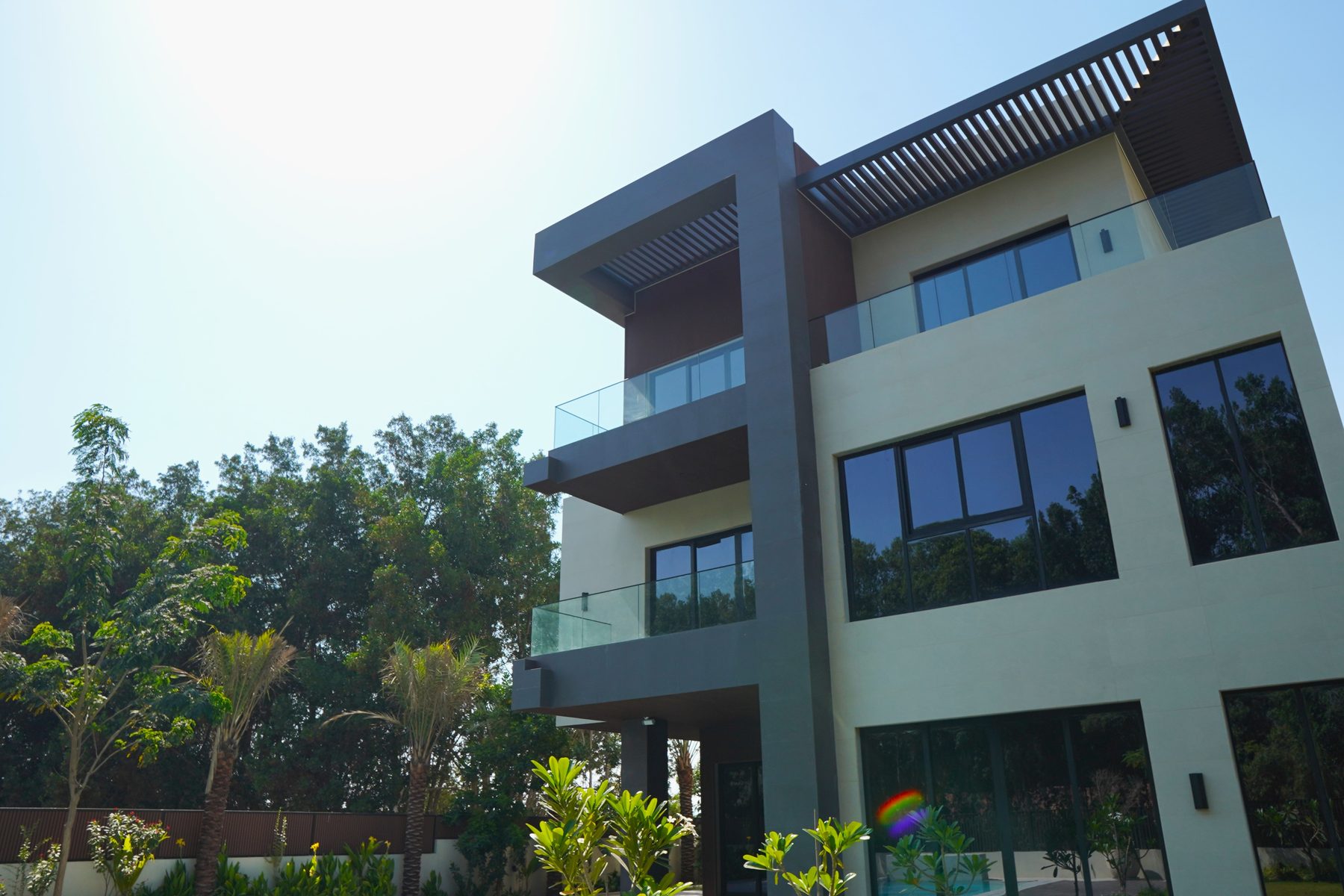
Renovating a villa is a bigger undertaking than refreshing an apartment — more trades, more approvals, and usually outdoor work as well as indoor. Done in the right order, it is a smooth process. Done out of sequence, it is where time and money disappear. This guide walks through how a villa renovation actually runs in Dubai, from the first survey to the final handover.
- Sequence is everything — structure, then MEP, then finishes, then joinery, then landscaping.
- Extensions and structural changes need a Dubai Municipality permit on top of the community NOC.
- Dubai's climate makes waterproofing, insulation and AC design more important than the finishes most people focus on first.
- A full villa renovation commonly runs four to nine months on site, longer with extensions.
1. Define the brief and survey the villa
Everything starts with a clear brief and an honest survey. How will you use the spaces? What stays, what goes, what gets extended? At the same time, the villa needs a proper condition survey — roof and wet-area waterproofing, the age of the AC and electrical systems, any settlement or damp. Older villas often hide work that should be done while everything is open, and it is far easier to plan for it now than to discover it later.
2. Design and material selection
With the brief agreed, design develops the layout, the look and the technical detail in parallel. This is the stage to choose finishes, stone, tile, joinery and fittings, because lead times on imported materials can be long and late changes are the most common cause of delay. A good design package is also what makes approvals and scope accurate rather than guesswork.
3. Approvals and permits
Villas usually need two layers of approval. The community or master-developer NOC covers the works in principle, and a Dubai Municipality building permit is required for structural changes, extensions and change-of-use. Some works also need Civil Defence sign-off for fire and life safety. We prepare and submit these together so the programme is not held hostage to paperwork.
4. Phase the works in the right order
The sequence that keeps a villa renovation clean:
- Enabling and strip-out — clear what is being removed, protect what stays.
- Structure — any demolition, extensions, new openings and slabs.
- MEP first-fix — plumbing, electrical, AC ducting and drainage routed before walls close.
- Waterproofing and screeds — roofs, terraces and wet areas, flood-tested.
- Finishes — plaster, tiling, flooring, paint.
- Joinery and fit-out — kitchens, wardrobes, built-ins and second-fix MEP.
- External works and landscaping — driveways, pools, planting and outdoor lighting.
5. MEP and AC for the Dubai climate
This is where villa renovations are won or lost, even though it is hidden behind the walls. Cooling loads, duct sizing, roof and external-wall insulation, and waterproofing all have to suit summer extremes. Upgrading tired air-conditioning and reworking insulation during a renovation improves comfort and efficiency every year — and it is far easier to do now than to retrofit later.
6. Pools, outdoor and landscaping
Villas live outdoors as much as in. Pools, decking, shade structures, outdoor kitchens and planting are part of the same project and should be designed with the interiors, not bolted on afterwards. Landscape and external works also carry their own waterproofing and drainage detail that needs to be right the first time.
7. Finishing, snagging and handover
Before sign-off, a detailed snag list is worked through and cleared — finishes, joinery alignment, MEP commissioning, water tests. A proper handover includes warranties and the documentation you will need later. Many villa owners then move onto a maintenance contract, which keeps the AC, MEP and finishes in good order long after the project ends.
Common pitfalls
- Choosing finishes before resolving structure and services — it forces expensive rework.
- Underestimating approvals for extensions, which need a municipality permit, not just an NOC.
- Skimping on waterproofing and insulation to spend more on visible finishes.
- Splitting the job across separate contractors, so no one owns the result.
How NovaPlex delivers villa renovations
We run villa projects end to end — design, approvals, structure, MEP, fit-out, joinery and landscaping — under a single accountable team. One point of responsibility means the sequence holds, the approvals land on time, and the finish matches the drawings. Tell us about your villa and we will map the scope, the approvals and a realistic programme.